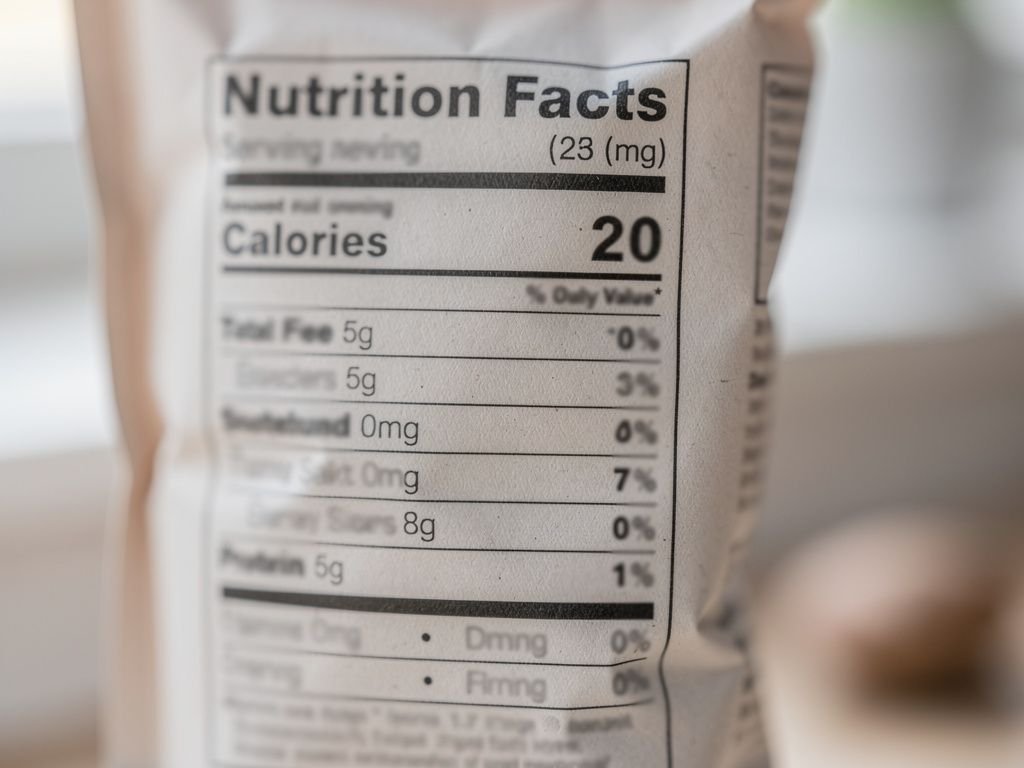
Nutrition labels are packed with numbers, but most people only glance at calories and walk away without the information that actually matters for their goals. The first thing to check, before anything else, is the serving size at the top of the label. A bag of chips might list a serving as 12 chips when the bag realistically holds three servings, so every number below it needs to be multiplied accordingly if you're eating the whole bag.
The percent daily value column is more useful than most people give it credit for. It's calculated against a 2,000-calorie reference diet, and as a rough rule of thumb, 5% or less of a nutrient is considered low while 20% or more is considered high. This is especially useful for sodium and saturated fat, where you generally want to stay on the low side, and for fiber and potassium, where higher is usually better.
Added sugars, now broken out separately from total sugars on updated labels, deserve particular attention. Total sugars include naturally occurring sugars from fruit or dairy, which don't carry the same metabolic concerns as sugars added during processing. If a plain yogurt shows sugar content, that's likely lactose; if a flavored yogurt shows a much higher number with a large added sugars line, that's the manufacturer's syrup talking.
Ingredient lists are ordered by weight, which means whatever appears first makes up the largest proportion of the product. If sugar, corn syrup, or a refined oil appears in the first three ingredients, that tells you more about the product's actual composition than the marketing on the front of the package ever will.
Finally, don't treat any single label in isolation. Context matters: a slightly higher-sodium canned bean eaten as part of a low-sodium day is a very different choice than the same bean eaten alongside a salty takeout meal. Labels are a tool for pattern recognition over a week or a month, not a pass-fail test for any one food.