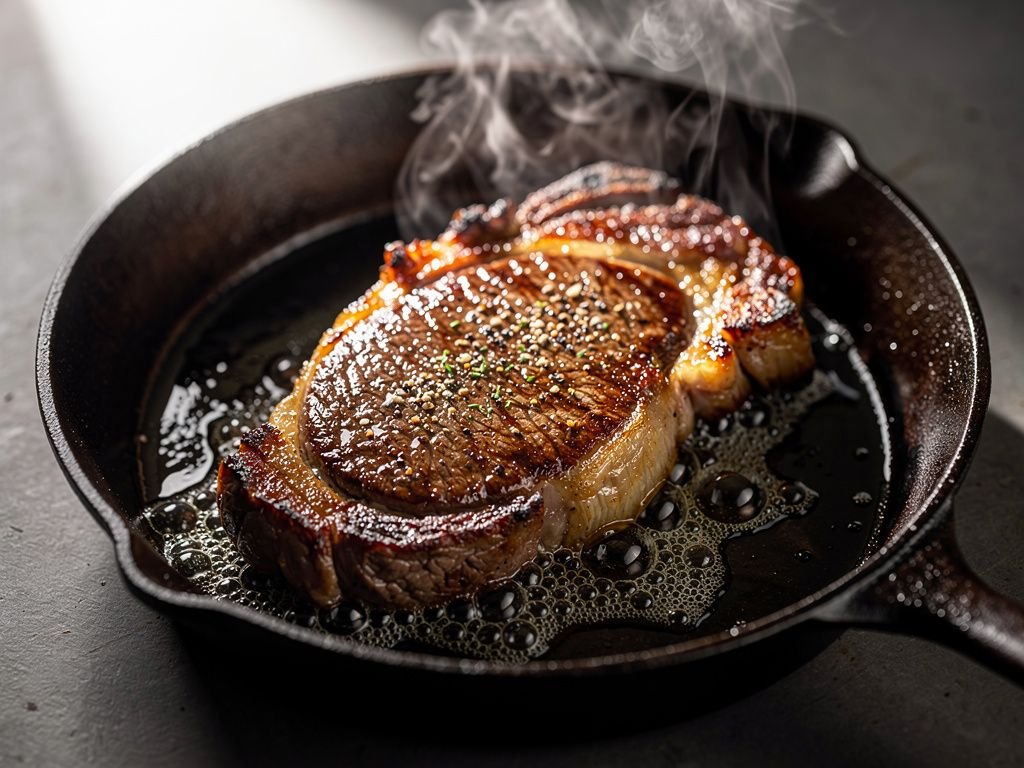
A perfectly seared steak or piece of fish comes down to a chemical reaction called the Maillard reaction, where proteins and sugars on the food's surface break down and recombine under high heat to create hundreds of new flavor compounds along with that deep brown crust everyone chases. Getting a good sear reliably requires understanding the few variables that actually control it.
Moisture is the sear's biggest enemy. Water on the surface of meat has to fully evaporate before the surface temperature can climb high enough for browning to begin, and that evaporation absorbs heat, stalling the process. Pat your protein completely dry with paper towels, and if time allows, let it sit uncovered in the refrigerator for an hour or more beforehand to dry the surface further.
Pan temperature needs to be genuinely hot before food goes in, not just warm. A properly preheated pan should be hot enough that a drop of water flicked onto it skitters and evaporates almost instantly. Adding meat to a pan that isn't hot enough means the surface spends too long in the temperature range where it steams rather than sears.
Resist the urge to move the food around once it's in the pan. Every time you flip or shift a piece of meat too early, you tear away the developing crust before it has released naturally, which happens once enough browning has occurred that the proteins stop sticking to the pan's surface. Give it the time it needs, and it will release cleanly on its own.
Finally, don't crowd the pan. Overcrowded food releases steam that has nowhere to escape, raising the humidity right at the food's surface and undermining the whole process. Cook in batches if necessary, keeping finished pieces warm in a low oven while you finish the rest.