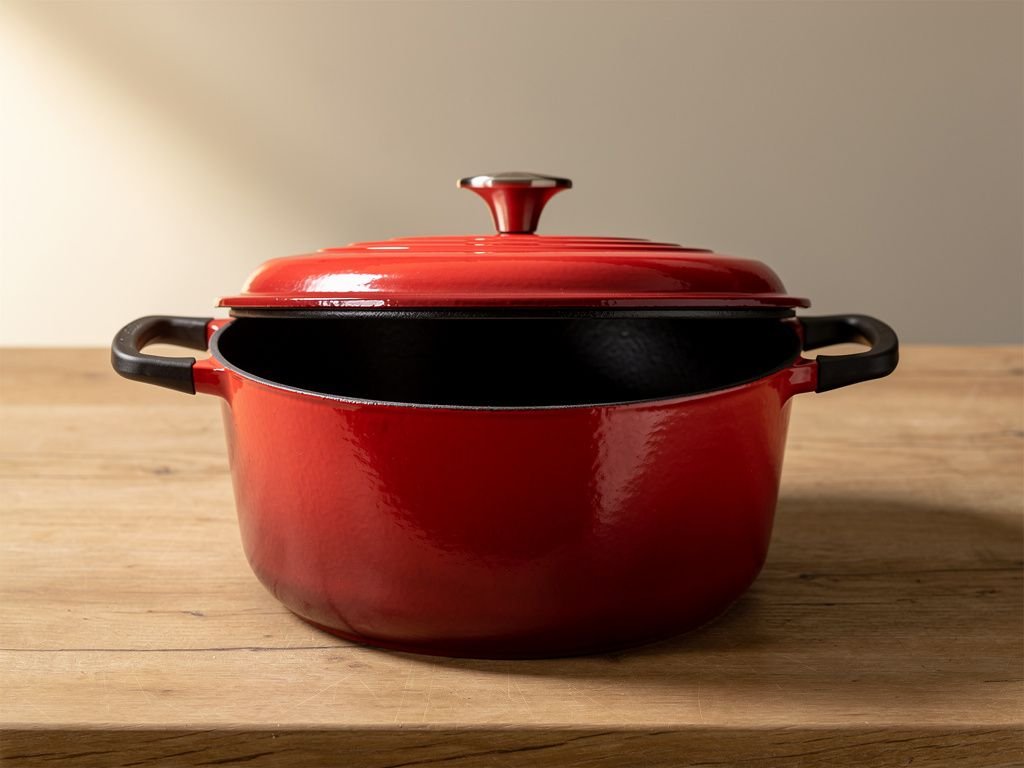
A good Dutch oven is one of the few kitchen tools that genuinely earns its price tag through decades of use, but the range of options on the market can make a first purchase feel more complicated than it needs to be. The core decision is between enameled cast iron and bare cast iron, and for most home cooks, enameled wins for its versatility.
Enameled cast iron doesn't require seasoning, resists rust, and can go from browning meat on the stovetop to a long braise in the oven without any special maintenance beyond regular washing. Bare cast iron requires seasoning upkeep and can react with acidic ingredients like tomato sauce or wine, which can strip seasoning and impart a metallic taste, making it a poorer fit for the braises and stews a Dutch oven is often used for.
Size matters more than most first-time buyers expect. A 5 to 7 quart oven handles most family-sized soups, stews, and braises, while anything smaller struggles to fit a whole chicken or a large batch of chili. If you're cooking primarily for one or two people, a 3 to 4 quart size can work, but you'll find yourself limited when hosting or batch cooking.
Lid weight and fit are worth checking in person if possible. A heavy, well-fitted lid traps moisture during braising, which is essential to the low-and-slow cooking these pots are designed for. Loose-fitting lids let steam escape, drying out long-cooked dishes and defeating much of the pot's purpose.
Finally, don't overlook the handle design. Small side handles that stay cool enough to grip with a folded towel, rather than requiring full oven mitts, make a real difference when you're maneuvering a heavy, hot pot in and out of the oven multiple times during a long cooking session.