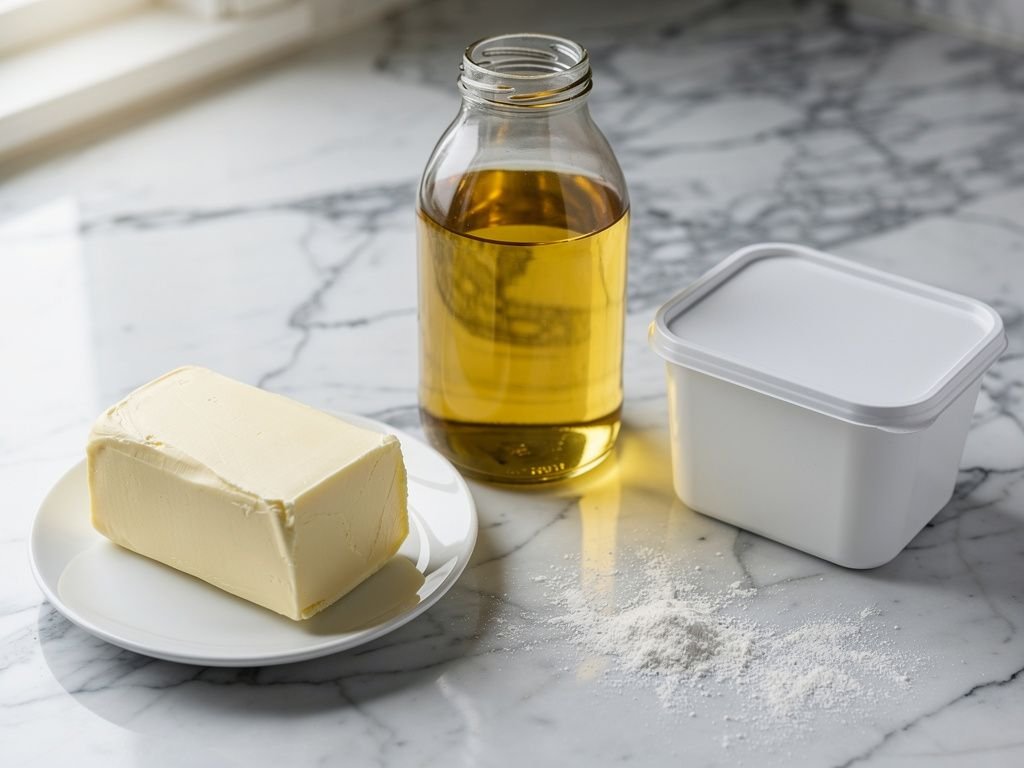
Swapping one fat for another in a baking recipe seems harmless, but fats behave in fundamentally different ways once heat is applied, and understanding those differences explains why a substitution can quietly ruin a cake or cookie's texture. Butter, oil, and shortening each interact with flour, sugar, and moisture in distinct ways that shape the final crumb.
Butter is roughly 80 percent fat and 20 percent water, and that water content matters. As butter melts in the oven, its water converts to steam, contributing to lift in items like pastry and biscuits. Butter also carries milk solids that brown during baking, which is why butter-based baked goods often develop a richer, nuttier flavor than those made with oil.
Oil, being 100 percent fat with no water content, produces a different texture entirely. Cakes made with oil tend to be more moist and tender over a longer shelf life because oil stays liquid at room temperature, keeping the crumb soft, whereas butter solidifies as it cools, which can make butter-based cakes firmer once they're no longer warm.
Shortening, essentially solid fat with almost no water and no milk solids, produces the most tender, crumbly texture of the three because it coats flour proteins more thoroughly, limiting gluten development. This is why pie crust recipes calling for shortening often produce a flakier, more tender crust than all-butter versions, though at some cost to flavor complexity.
Understanding these differences means you can make smarter substitutions. If a recipe calls for butter and you're out, oil will usually work in a pinch for a moist cake but will change a cookie's spread and texture noticeably, since butter's water content and solid-at-room-temperature structure are part of what gives cookies their characteristic chew and structure.
Keep reading